CISN - Molecular Diagnostics Background
| You Are Here: Home > Personalized Medicine > Molecular Diagnostics > Background | ||||||||||||||||
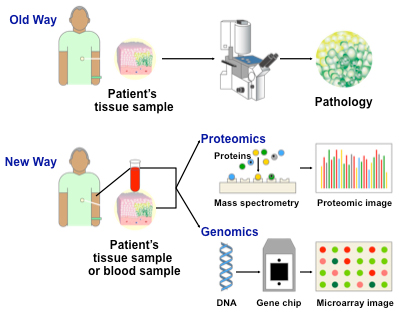
Molecular DiagnosticsBackgroundThe human body is made up of trillions of cells that talk to one another to keep you healthy. Normal cell growth requires a communications network that functions properly. This network is an extremely complex system of protein pathways. The genetic changes associated with cancer result in changes in proteins that disrupt the cells communication network. As cancer develops, these altered proteins cause normal cell talk to become distorted, disrupting normal communication and ultimately leading to uncontrolled tumor growth. The challenge once cancer is diagnosed is to locate these rebel genes and proteins that have hijacked normal cellular communication and correct the problem before it becomes life threatening. This requires analyzing the molecules inside the cell using molecular diagnostics. Before the use of molecular diagnostics, doctors primarily classified cancer cells primarily according to their appearance under a microscope (pathology). Molecular diagnostics assesses the interactions of genes (genomics) and proteins (proteomics), identifying gene and protein activity patterns in cancerous cells. Using technology such as mass spectrometry and gene chips, molecular diagnostics is able to identify genes active in cancer, separating them from the others in cells.
|
| Personalized Medicine & You |
|
| Understanding Tissue Issues |
|
| Ethics | |
| Molecular Diagnostics |
|
Molecular diagnostics identifies the gene and protein activity as expression patterns or molecular signatures. These molecular signatures improve your doctor's ability to diagnose cancer, characterize different molecular subtypes, and recommend specific targeted therapies for you.
|
| 1 2 | |
 |